CRM for Education Institutes: A Smarter Way to Manage Students, Leads, and Enrollment

Education institutes handle a wide range of activities every day, from attracting prospective students and managing inquiries to coordinating admissions and maintaining communication with parents and learners. As student expectations increase and competition among educational organizations grows, institutes need efficient systems to manage these relationships. A CRM for education institutes can provide a centralized platform for organizing student information, streamlining communication, and improving the enrollment journey.
Whether it is a school, college, university, coaching center, vocational institute, or online education provider, a CRM can help teams manage prospective and existing student relationships more efficiently. By replacing scattered spreadsheets and manual processes with an organized digital system, educational organizations can improve productivity and create more consistent experiences.
What Is a CRM for Education Institutes?
A Customer Relationship Management system for education is designed to manage interactions between an institute and its prospective students, current learners, parents, and other stakeholders. It brings important information into one centralized platform.
Admissions teams can use CRM software to capture inquiries, track prospective students, schedule follow-ups, manage applications, and monitor enrollment progress. Marketing teams can analyze campaigns and lead sources, while management can use reports to understand admission trends and team performance.
Simplifying Student Lead Management
Educational institutes receive inquiries through websites, social media, advertisements, phone calls, referrals, educational fairs, and other channels. Managing all these inquiries manually can result in missed follow-ups and inconsistent communication.
A CRM for education institutes can automatically organize incoming leads and assign them to appropriate counselors or admission teams. Staff members can record conversations, add notes, schedule follow-ups, and track the status of each prospect.
This creates a structured admissions pipeline where teams can quickly identify which students are new inquiries, which require additional information, and which are ready to complete enrollment.
Improving the Admission Process
The admission process can involve multiple stages, including inquiry, counseling, application, document submission, eligibility verification, fee discussion, and enrollment. Without a centralized system, it can be difficult for teams to know the exact status of every applicant.
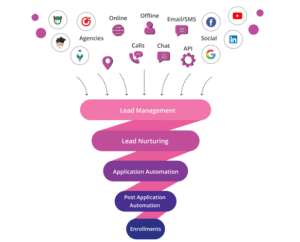
CRM software can provide a clear view of the admission pipeline. Counselors can monitor applications and identify pending tasks or follow-ups. Automated reminders can help ensure that important activities are completed on time.
This organized approach can reduce administrative work and make the enrollment process easier for both staff and prospective students.
Personalized Communication With Students
Students and parents often have questions about courses, fees, schedules, eligibility, facilities, career opportunities, and admission deadlines. Providing timely and relevant information can have a significant impact on their decision-making process.
A CRM helps education teams maintain communication histories and customer profiles. Counselors can review previous conversations before contacting a prospect, allowing them to provide more personalized assistance.
Institutes can also segment contacts based on course interests, location, academic background, application stage, or other relevant criteria. This makes it easier to send targeted messages instead of generic communications.
Supporting Marketing Campaigns
Educational institutions invest heavily in marketing to attract students. However, understanding which campaigns generate valuable leads is essential for improving marketing efficiency.
A CRM can help institutes track where inquiries originate. Teams can compare leads from search campaigns, social media, websites, events, referrals, and other channels.
Marketing teams can then identify high-performing sources and make more informed decisions about future campaigns. Automated communication workflows can also help nurture prospects who are not yet ready to enroll.
Better Follow-Ups and Enrollment Conversion
Consistent follow-up is one of the most important aspects of student recruitment. Prospective students may require several interactions before making an enrollment decision.
CRM software can provide reminders for calls, emails, counseling sessions, and other activities. This reduces the risk of prospects being forgotten or receiving delayed responses.
By monitoring the complete student journey, institutes can identify where prospective students commonly stop progressing. These insights can help admission teams improve their strategies and increase enrollment opportunities.
Reporting and Performance Insights
Educational organizations need accurate data to make effective decisions. A CRM can provide reports related to lead volume, admission conversions, counselor performance, course demand, campaign effectiveness, and enrollment trends.
Management teams can use these insights to understand what is working and where improvements are needed. Instead of relying on assumptions, decision-makers can use organized data to guide admission and marketing strategies.
Choosing the Right Education CRM
When selecting a CRM for education institutes, organizations should consider ease of use, automation, customization, reporting, integration, mobile accessibility, and data security.
The system should support the institute’s specific admission workflow and allow administrators to configure fields, stages, tasks, and communication processes. Integration with websites, email, communication platforms, payment systems, or student management tools can further improve operational efficiency.
Data protection is also important because education institutes manage sensitive student and parent information. Appropriate access controls and security measures should be evaluated before implementing any CRM platform.
Conclusion
Managing student relationships effectively is becoming increasingly important for educational organizations. A CRM for education institutes can bring admissions, lead management, communication, marketing, follow-ups, and reporting together in one organized environment.
By automating repetitive tasks and providing better visibility into the student journey, CRM technology can help education institutes improve operational efficiency and deliver more personalized experiences. With the right solution, schools, colleges, coaching centers, and other educational organizations can build stronger relationships while creating a more efficient and scalable enrollment process.
